
Deep learning has rapidly evolved from a specialized research domain into a transformative force shaping modern technology. From personalized recommendations and intelligent voice assistants to autonomous driving and medical diagnostics, deep learning now powers countless real-world applications. As educators, researchers, and practitioners with diverse academic and industry backgrounds, we felt a collective need for a book that bridges foundational theory, practical tools, hands-on frameworks, and end-to-end projects—all in one comprehensive volume. Hands-On Deep Learning: Tools, Frameworks, and Projects is our collaborative effort to meet that need.
This book is designed for students, engineers, educators, and professionals who want more than just conceptual understanding. It offers practical, implementation-oriented knowledge that enables readers to build, train, optimize, and deploy deep learning models using the most widely used programming tools and frameworks. We follow a balanced approach—starting from core principles, advancing through frameworks like TensorFlow, Keras, PyTorch, and FastAI, and culminating in a collection of full-fledged deep learning projects.
The book opens with a thorough introduction to artificial intelligence and machine learning, tracing the evolution of deep learning and explaining its biological foundations. We highlight the structure and functioning of neural networks and the essential components—activation functions, perceptrons, and deep neural architectures—setting the stage for more advanced topics.
A strong programming foundation is indispensable for mastering deep learning. Chapter 2 equips readers with key Python skills along with hands-on exposure to NumPy, Pandas, Matplotlib, and Seaborn. We emphasize the importance of reproducible experiments, environment setup, and the role of GPUs, CUDA, and cuDNN in accelerating model training.
Chapters 3 and 4 focus on deep learning frameworks and architectures. Readers learn how to build, train, and evaluate models using TensorFlow/Keras and PyTorch, gaining insights into essential mechanisms like tensors, backpropagation, automatic differentiation, and efficient model construction. We also introduce FastAI for rapid prototyping and framework selection for various use cases. Architectural explorations follow—MLPs, CNNs, RNNs, LSTMs, GRUs, Transformers, autoencoders, GANs, attention mechanisms, and modern deep learning models—providing a solid conceptual and practical foundation.
Chapter 5 dives deep into training pipelines, optimization techniques, loss functions, evaluation metrics, and hyperparameter tuning strategies. We guide readers through the intricacies of regularization, overfitting, underfitting, and model improvement techniques. The chapter concludes with practical insights into deploying trained models in production environments, reflecting our collective experience across academia, industry, and applied research.
The final chapter is the heart of the book—Hands-On Deep Learning Projects. Here, we bring theory to life through extensive, real-world projects. From CNN-based image classification and LSTM/Transformer-based sentiment analysis to YOLO/Faster R-CNN object detection, U-Net medical image segmentation, GAN image generation, speech recognition, reinforcement learning, and an end-to-end capstone project, readers gain practical intelligence-building exposure across multiple domains. Each project is designed to cultivate problem-solving skills, encourage experimentation, and strengthen understanding through implementation.
As a team of multi-author contributors, we have come together with broad yet complementary expertise—computer science, AI, electrical engineering, data science, applied mathematics, and research. Our shared vision has been to create a resource that is not only academically rigorous but also deeply practical, accessible, and inspiring. Throughout the writing of this book, we have drawn on years of teaching, research, and industry experience to provide a learning pathway that is both comprehensive and learner-friendly.
We hope this book serves as a meaningful companion in your deep learning journey. Whether you are a beginner eager to enter the world of AI, a student preparing for research, a professional looking to upskill, or an academic designing a course, may this work empower you with the knowledge and confidence to build intelligent systems that make a real impact.
We express our heartfelt gratitude to our families, students, colleagues, and institutions for their support and encouragement throughout the development of this book. We also extend our appreciation to the vibrant global deep learning community whose open-source contributions have made modern AI education more accessible than ever.
We invite you to explore, experiment, and innovate as you progress through the chapters. Deep learning is a field shaped by curiosity and continuous discovery—and we are delighted to have you join this journey with us.
-10%
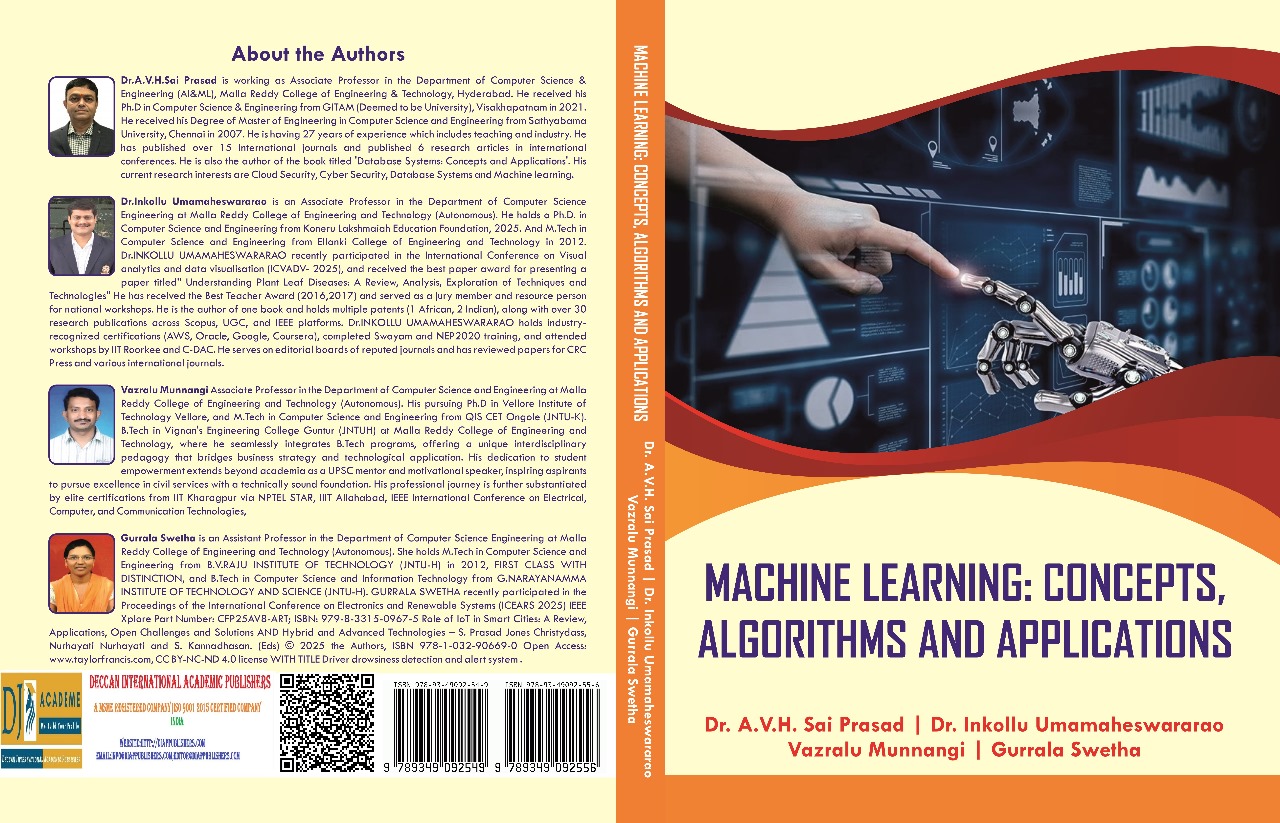
Machine Learning: Concepts, Algorithms and Applications BY Dr.A.V.H.SaiPrasad, Dr.I.Uma Maheswara Rao, Vazralu Munnangi, Gurrala Swetha
Original price was: ₹999.00.₹899.00Current price is: ₹899.00.
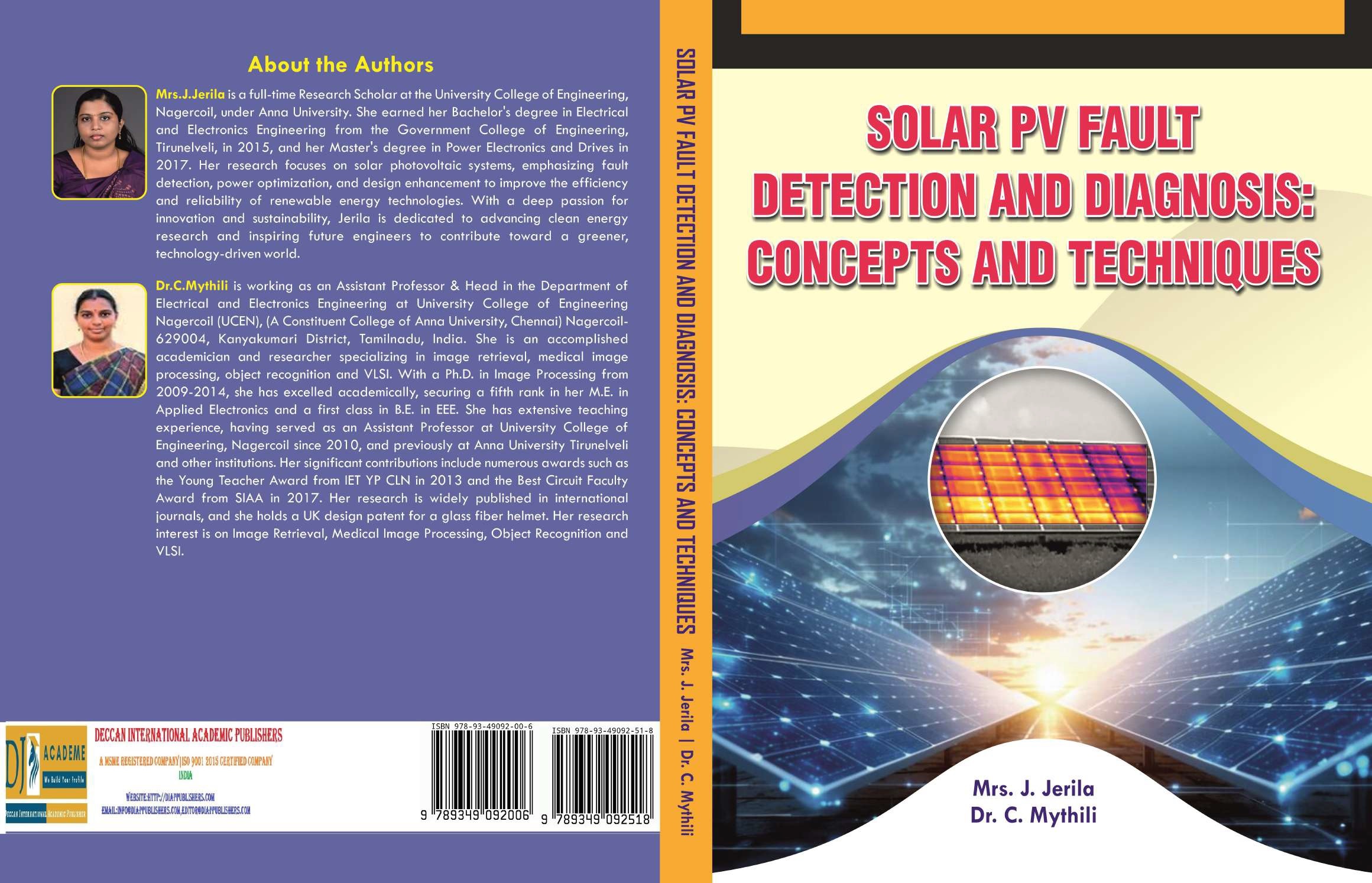
SOLAR PV FAULT DETECTION AND DIAGNOSIS CONCEPTS AND TECHNIQUES by Mrs. J. Jerila Dr. C. Mythili
Original price was: ₹999.00.₹777.00Current price is: ₹777.00.
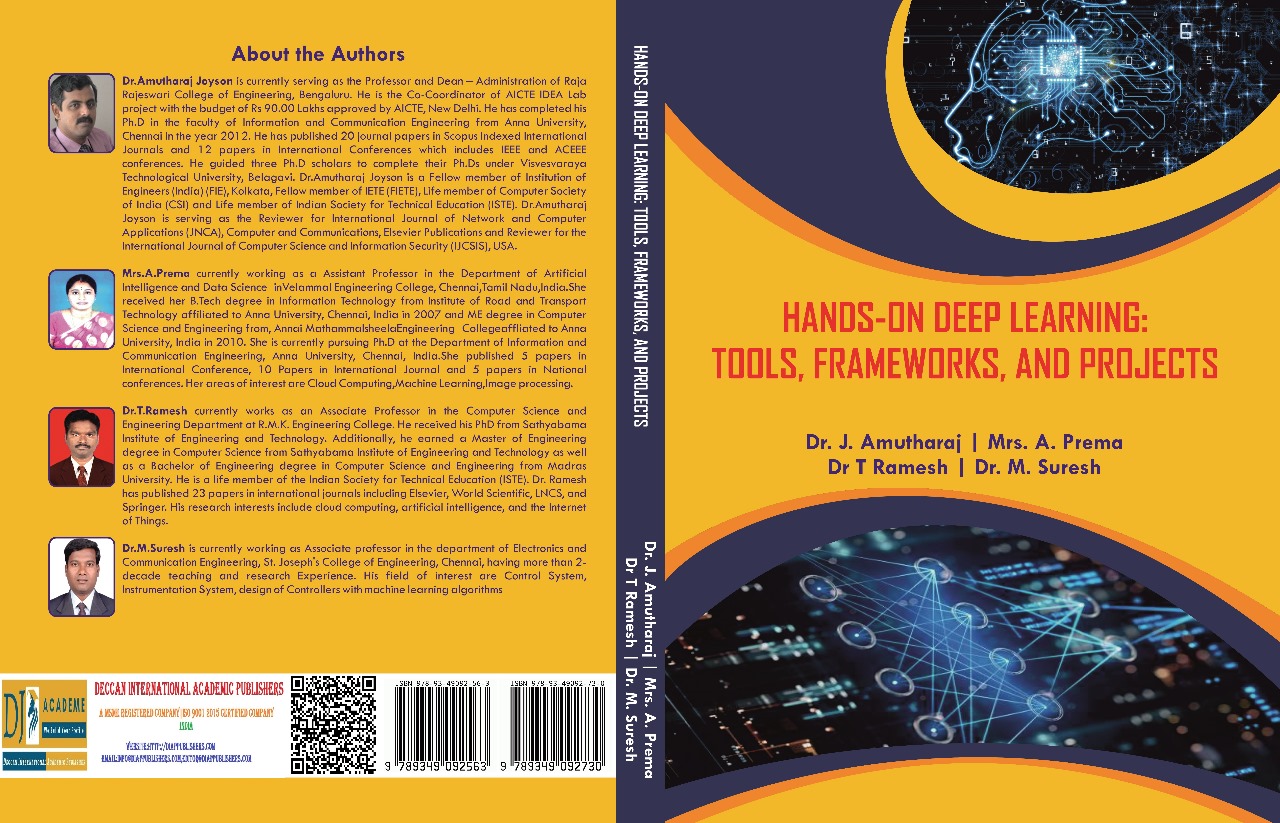
Hands-On Deep Learning: Tools, Frameworks, and Projects. BY Dr. J. Amutharaj, Mrs.A.Prema, Dr T Ramesh, Dr. M. Suresh
Original price was: ₹999.00.₹899.00Current price is: ₹899.00.
Description
Additional information
| Weight | 0.65 kg |
|---|---|
| Dimensions | 21 × 30 × 5 cm |
Reviews (0)
Shipping & Delivery
Reviews
There are no reviews yet.